BEGINNER GUIDE
How to Chalk a Pool Cue: The Right Way to Avoid Miscues
By Elite Cue · September 2026 · 5 min read
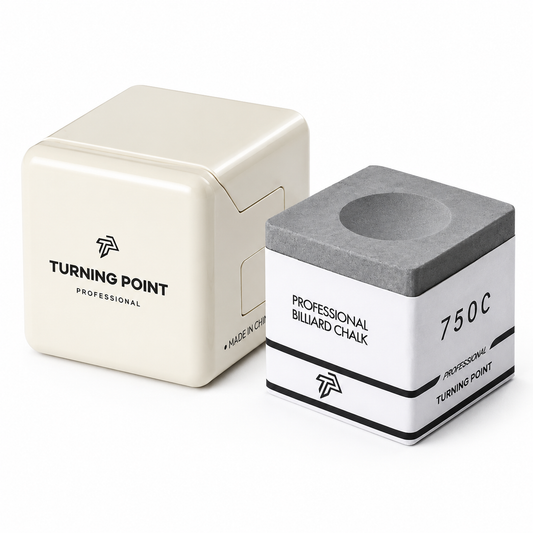
Chalking your cue seems simple — and it is — but most players either do it wrong, do it too little, or skip it entirely. A properly chalked tip is the difference between a clean shot and a frustrating miscue.
Why Chalk Matters
Pool cue chalk is not like chalkboard chalk. It is a fine abrasive powder (usually made from silica, clay, and dye) that creates friction between the leather tip and the smooth surface of the cue ball. Without chalk, the tip slides off the ball on contact — that is a miscue. With chalk, the tip grips the ball and transfers your stroke into spin and direction.
The Right Way to Chalk
- Hold the chalk flat against the tip. Do not jab or poke at the tip. Place the chalk square on the tip surface.
- Rotate the chalk as you apply. Turn the chalk cube slightly with each stroke so you use all sides evenly. This prevents the chalk from developing a groove in the center.
- Apply to the entire tip surface. Make sure the chalk covers the edges of the tip, not just the center. Most miscues happen because the tip is only chalked in the middle and the edge is bare.
- Use 2–3 light turns. You do not need to grind the chalk in. Two or three gentle rotations of the chalk across the tip is enough. More chalk does not mean more grip — it means more mess.
- Blow off excess. A quick puff of air removes loose chalk particles that would otherwise end up on the cue ball, the table, or your clothes.
When to Reapply
Chalk before every shot. This is non-negotiable for serious play. Even if you just chalked two minutes ago, the chalk wears off with each contact. Get into the habit: step up to the shot, chalk, then shoot. It takes two seconds and saves you from embarrassing miscues.
You should also reapply if:
- You have been executing jump shots or break shots (these strip chalk quickly).
- You accidentally hit the cue ball with the side of the tip (off-center contact).
- The tip looks shiny or smooth — that means the chalk has worn off.
How Much Chalk Is Too Much?
The most common mistake is applying too much chalk. A thick layer of chalk does not help — it actually creates a soft, unstable surface that can cause the cue ball to skid. You want a thin, even coating. If you see blue (or green, or black) dust falling off the tip as you shoot, you have too much on.
The right amount: the tip should look uniformly colored (no bare leather showing) but you should not see chunks or buildup.
Does Chalk Brand Matter?
Yes, but not as much as you think. Premium chalks like Turning Point, Taom Pro, and Kamui Athlete last longer, create less dust, and provide more consistent friction than cheap blue chalk. They also tend to stay on the tip better, meaning fewer reapplications.
That said, any chalk is better than no chalk. If you are starting out, a $3 cube of standard blue chalk will serve you fine. Upgrade to premium chalk once you notice your current chalk wearing off too quickly or creating excessive dust.
Chalk Storage Tips
- Keep chalk in a holder — loose chalk in your pocket collects lint and debris.
- Avoid dropping chalk on the floor. It picks up dirt that transfers to the tip.
- If chalk gets wet, let it dry completely before using. Wet chalk does not adhere properly.
- Some chalks (like Taom) are water-resistant, making them better for humid environments.
The Bottom Line
Chalk your cue before every shot. Use 2–3 light turns. Cover the entire tip. Blow off the excess. That is it. Master this two-second routine and you will eliminate the majority of miscues in your game.
Shop our full range of pool cue chalk to find the right one for your game.